
'The day that the market realises that they've overspent (on AI) and there's a sudden collapse in the capex, then India can start outperforming again.'

Recent developments - proposed changes to the goods and services tax (GST) rates and S&P Global Ratings' upgrade of India's long-term sovereign credit rating to BBB, with a stable outlook, - may not be enough to bring foreign investors back to Indian markets in a rush, feel analysts.

Christopher Wood, global head of equity strategy at Jefferies has rejigged his equity portfolios. In his Asia ex-Japan long-only portfolio, he has added Axis Bank (5 per cent weightage) and increased holding in Larsen & Toubro (L&T) by one percentage point. This, Wood said, will be paid for by removing the investment in ICICI Lombard General Insurance and reducing the investments in HDFC Bank and Reliance Industries (RIL) by one percentage point each.

Rising crude oil prices, traction in China equities and inflation concerns back home are casting a shadow on the Indian equity markets in the short term, believe analysts at Jefferies. They said this could see the markets remaining range-bound in the near term before the next leg up.

'A breakout above 158,000 to 160,000 could trigger the next leg higher toward 165,000 to 170,000.'

Global fund managers remain bullish on the Japanese stock markets, which is now their most preferred destination in the Asian region. Both Morgan Stanley and Jefferies in their recent reports, have cited their preference for the Land Of The Rising Sun, which is fast becoming the land of the rising equities, too.

Analysts have sharply reduced cigarette maker ITC's earning estimates for the next two years, fearing a significant dent in the company's profitability and margins. This is owing to a steep hike in excise duty on tobacco by the government.

Despite the rally in equities over the last few years, India, according to Christopher Wood, global head of equity strategy at Jefferies, is still in early stages of an equity cult. Any changes to the capital gains tax for equities - both long-term and short-term - in Budget 2024 scheduled to be announced on July 23, he believes, can trigger a bigger correction that what the markets witnessed post the Lok Sabha election outcome on June 4 that saw the Bharatiya Janata Party (BJP) lose majority, though it was able to form the government with the help of coalition partners.

'If nominal growth improves and earnings pick up, Indian stock markets could see a rally next year.'

Global head of equity strategy at Jefferies, Christopher Wood, has cut his exposure to Indian equities by one percentage point in the Asia-Pacific ex-Japan relative-return portfolio, and Australia and Malaysia by half a percentage point each in favour of China, which has seen a hike in exposure by two percentage points. The rally in China has been fast-forwarded by the approach of a seven-day holiday with the CSI 300 Index up 8.5 per cent on Monday, and 25.1 per cent in five trading days, he said.
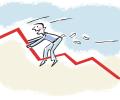
The recent stimulus measures announced by China have seen most analysts sit up and take notice.

However, despite Covid, Indian markets registered their best financial year performance in a decade, with the Sensex and Nifty50 rallying 68 per cent and 71 per cent, respectively, in FY21.

India's stock markets corrected recently but foreign money is likely to chase China rather than India in the short-to-medium term, said Chris Wood, global head of equity strategy at Jefferies, on Thursday. Wood told the Business Standard Manthan Summit in New Delhi he is bullish about Indian equities from a long-term perspective, but for the short term he is cautious given the quantum of foreign investor (FII) outflows and valuation woes.
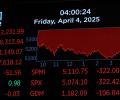
'If the US stagnates and falls into a recession, the dollar will weaken, oil prices will also dip. This augurs well for India.'

The proposed reforms in goods and services tax (GST) announced by the government last week, coupled with the eighth pay commission dole-out, is likely to push consumption-driven stocks - such as air conditioners (ACs), select automobiles, fast-moving consumer goods (FMCG), retail, and counters of quick-service restaurants (QSRs) - into higher orbit over the next few months, believe analysts.

'If you look at where inflation (headline and core) is today in India and where the rates are, there's clearly room to cut rates.'

Companies are looking to combine risk management with strategy.

Indian funds did better than Asian ones in only four of the 10 months -- till October. Despite much market optimism, presumably around policy interventions and guided by buoyant flows, India's macro backdrop may be turning for the worse.

Christopher Wood, global head of equity strategy at Jefferies reiterate his bullish view on Indian equities on the back of a steady fall in Covid cases coupled with a sharp economic recovery in India, reports Puneet Wadhwa.

Analysts suggest investors remain in a wait-and-watch mode and not jump in to buy stocks across-the-board.

Global financial markets are not yet fully factoring in any escalation in the Israel-Palestine geopolitical conflict, said Christopher Wood, global head of equity strategy at Jefferies in his latest weekly note to investors, GREED & fear. The pertinent point about ongoing events in West Asia from a financial market perspective, according to him, is that, despite much talk about a pending ground invasion of Gaza, no such invasion has yet happened. "This is beginning to make GREED & fear wonder if it is ever going to happen.

Global funds, according to Christopher Wood, global head of equity strategy at Jefferies, are now beginning to pay more attention to India with the market now offering 30 companies with a market capitalisation over $25 billion.

Global financial markets are wrong in hoping that the worst is over in geopolitical crises such as the Iran-Israel conflict and the Russia-Ukraine war, wrote Christopher Wood, global head of equity strategy at Jefferies, in a recent note to investors called 'GREED & fear'. While most investors and the media are focused on United States (US) Federal Reserve policy and the "endless chatter" of Fed governors, Wood believes the news flow in the financial sphere "pales into complete insignificance" compared with the "tectonic shifts" going on in geopolitics.

'If there is any reason to change my holding in Adani group stocks, the Hindenburg report on the group is not the one.'

Even as Srini Pallia, a Wipro veteran, is set to take charge as the chief executive officer (CEO) of the company, analysts expect the stock's underperformance to continue in the near-future. This, they believe, will be on the back of likely loss of market share, and difficult business environment. "We expect Wipro to underperform peers on growth once again in FY25 as channel checks and media reports suggest Wipro is losing share with select clients across multiple verticals.

Government announcements for the building of new roads, railways, and other capital expenditure (capex) projects may have hit an all-time low, according to numbers for the December quarter.

The sharp correction in the Indian markets from their peak levels has made valuations attractive, say analysts, who advise buying selectively, but only from a long-term perspective. Fifty-six of the Nifty 100 stocks, according to Mahesh Nandurkar, managing director at Jefferies, now trade below the 10-year historical averages, including stocks in financial, select auto, and pharma sectors. "Valuation (one-year forward consensus price-to-earnings, PE) has declined 25 per cent from October 2021 peak, almost matching the 33 per cent price-earnings contraction during the 2011 tightening cycle when repo rates went up by 375 basis points (bps) versus 250 bps this cycle.

Wall Street-correlated stock markets are facing the risk of correction, as Christopher Wood, the global head of equity strategy at Jefferies, conveys to investors in his latest edition of GREED & fear. Rising crude oil prices, which are nearing $100 a barrel (Brent), pose a threat to the global central bank's battle against inflation and have led to a re-evaluation of its exposure to Indian stocks. "The potential for more US Federal Reserve (Fed) rate hikes, combined with the risk that monetary tightening finally bites as regards the economy, remains a risk for Wall Street-correlated world stock markets. "There is also the oil factor. This is why GREED & fear continues to believe the pain trade is down. "Areas in Asia, such as Indian midcaps, which have already done very well, are at obvious risk of some profit-taking," writes Wood.
'This resilience should be viewed as reflecting the strength of the structural story.'
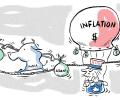
'The biggest risk to the Indian markets from a 12-18-month view is that the current government does not get re-elected, or loses in a way that is not represented at all in the next central government.'

The sharp rally in the midcap stocks has made valuations expensive, and there is room for a correction, wrote Christopher Wood, global head of equity strategy at Jefferies in his latest note to investors, GREED & fear. The midcap index, Wood said, now trades at 24.1x 12-month forward earnings compared with 18.7x for the Nifty. Rising crude oil prices, he believes, are another worry for India, which imports nearly 80 per cent of its annual crude oil requirement.

The interim Budget proposals that will be presented on February 1 in the backdrop of the general elections scheduled in April/May 2024 are likely to have a hint of populism, believe analysts, but are unlikely to derail the government from its path of fiscal prudence.

'Like all long-term bull markets, the Indian stock market will continue to climb the proverbial wall of worry.'

However, in the last few sessions, the stock of Mukesh Ambani-controlled Reliance Industries Limited (RIL), hit its 52-week low level of Rs 2269.75, and has been one of the worst performers among the Sensex pack thus far in calendar year 2023 (CY23). Thus far in CY23, RIL has tanked nearly 11 per cent as compared to a fall of around 5 per cent in the S&P BSE Sensex. The fall in the stock, according to Gaurang Shah, senior vice-president at Geojit Financial Services is mostly due to the overall dip in the market sentiment, which in turn has impacted large-caps, including RIL.

It has mostly been a one-way street for markets that have moved up sharply since July. The front-line indices - the S&P BSE Sensex and the Nifty50 - have gained 6.7 per cent and 7.3 per cent, respectively, in the past three months. The rally in mid- and small-caps has been sharper, with both indices surging 14 per cent and 9 per cent, respectively, during this period. This sharp run has made analysts at Jefferies cautious.

The year-to-date returns are 13.33 per cent for Indian funds, compared to 11.66 per cent for emerging market funds overall.

With the Nifty50 just about 3 per cent away from its all-time closing high of 18,812 points, analysts at BofA Securities suggest investors book profit. Their reasons for the advice include risks like the possibility of a cut in corporate earnings growth forecasts, high valuation (one-year forward P/E of 19.5x), interest rates staying elevated for longer-than-expected and credit tightening. Going ahead, they expect the Nifty50 index to drop to 16,000 levels - down nearly 12 per cent from the current level of 18,255 points, which they believe would be a good time to buy.

Given the impact Covid-19 pandemic had over the world economy, analysts expect global central banks, especially the US Fed, to keep the liquidity tap open, which, in turn, is likely to keep the equity markets, especially those in the emerging markets, buoyant.

The global turmoil in the banking sector has made analysts cautious, who advise that investors stay away from stocks of this sector till the overall sentiment improves. The recent trouble for the banking sector started with the collapse of US-based Silicon Valley Bank (SVB), Silvergate Capital and Signature Bank. On its part, Moody's Investors Service has also cut its outlook for the US banking system to 'negative' from 'stable', citing the run on deposits at these three banks that led to the collapse of these banking majors in less than a week.

Net sales growth for the quarter ended December (Q3FY20) was 4.5 per cent on a year-on-year (YoY) basis for companies that have declared their results so far, compared to an 8.4 per cent rise in the first half of the financial year. This indicates that there could be a further rise in days' sales of inventory.
